A crochet Christmas table runner gives a holiday table something a store-bought centerpiece rarely offers: texture you can actually feel. It can be a quiet cream strip under greenery or a rich red accent that makes everyday plates look ready for December. You do not need tiny thread or an elaborate snowflake chart to get started.
This beginner’s guide walks through choosing yarn, planning dimensions, practicing a stitch repeat, and finishing a runner that sits neatly. For stitch-by-stitch instructions, use the credited shell-stitch tutorial below. The planning advice is original editorial guidance; it is not a claim that Crovela has made or tested the designer’s pattern.
Table of Contents
Choose a Crochet Christmas Table Runner You Can Finish
Start with a rectangle worked back and forth. A repeating stitch is easier to check than a large picture chart, and a solid color makes it simpler to spot missed stitches. If you have only made chains, spend a little time learning single and double crochet before committing to a long piece.
For a first crochet Christmas table runner, pick one main feature: texture, stripes, or a decorative edge. Combining all three adds decisions at every stage. Burgundy shell stitches already look festive; they do not need metallic yarn, tassels, and appliqués to make an impression.
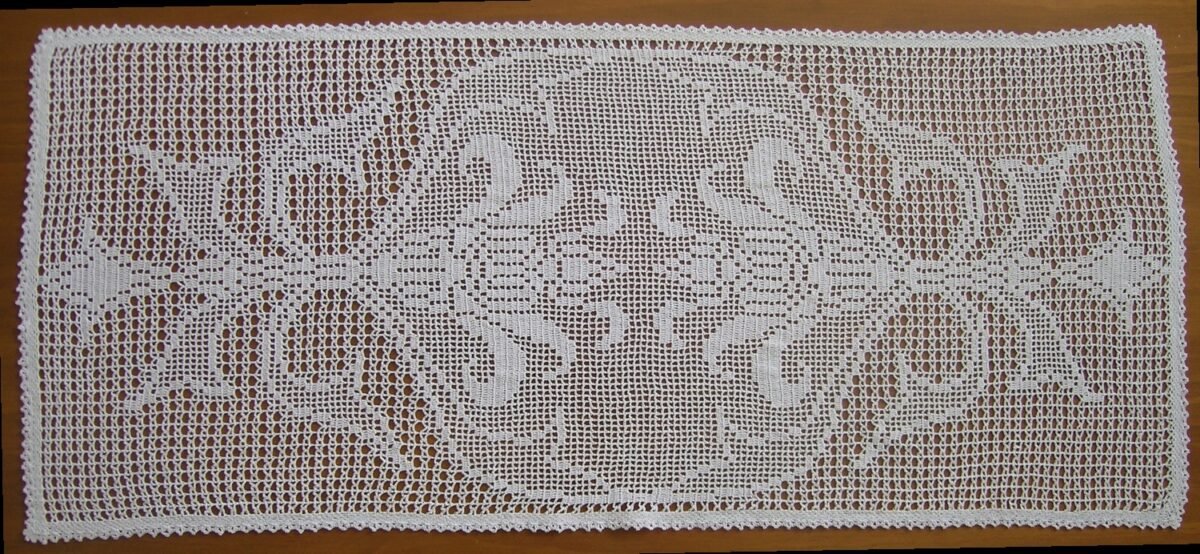
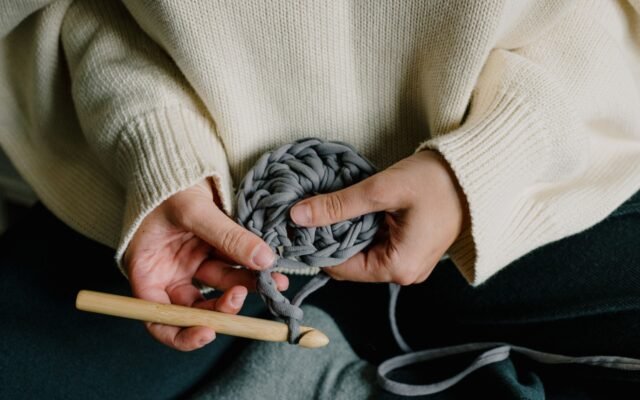
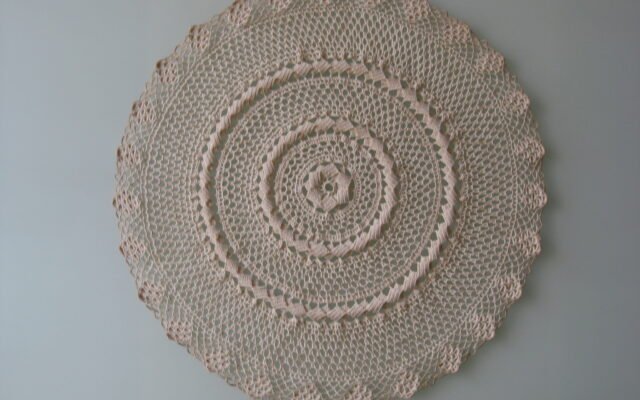
The featured photograph shows filet crochet as design inspiration. It is a different technique from the shell-stitch video. All four photographs are real, licensed images of separate projects or supplies, rather than a before-and-after record of one make.
Materials Needed
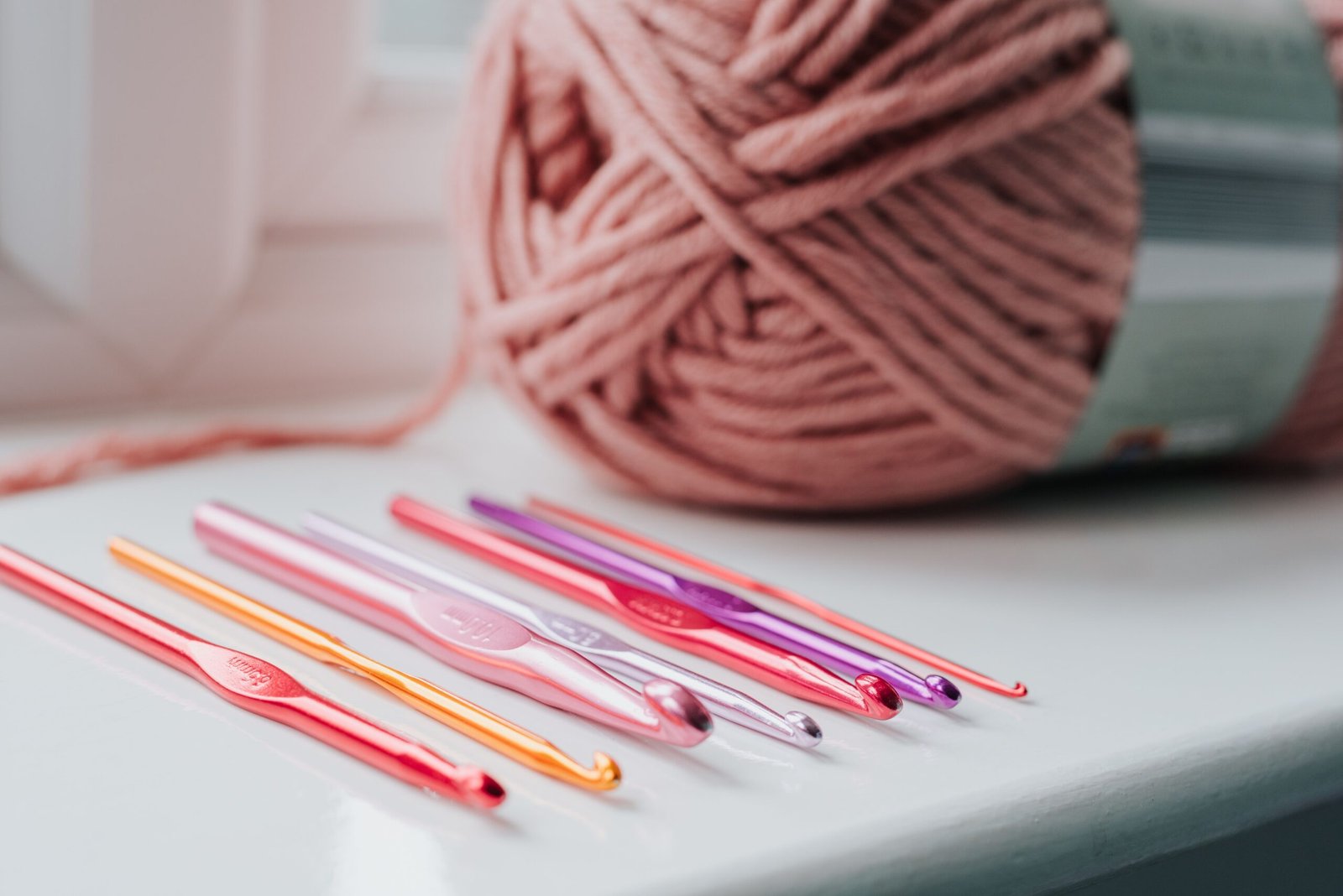
Gather yarn, a matching crochet hook, scissors, a blunt tapestry needle, stitch markers, and a tape measure. A kitchen scale is useful for estimating yarn needs. For blocking, have a clean towel, a flat drying surface, and rust-resistant pins if the fiber and pattern call for them.
Smooth, light-colored yarn is easier to read than fuzzy or heavily variegated yarn. Cotton can give clear stitch definition and a useful tabletop fabric, while acrylic can be a practical decorative choice. Check the actual ball band for washing instructions and make your sample in the fiber you intend to use.
A crochet Christmas table runner is decoration, not a certified heat barrier. Put hot dishes on suitable trivets, and keep yarn away from candle flames. Metallic-looking yarn is not necessarily heat resistant. Battery-operated candles avoid placing an open flame beside your handiwork.
Plan the Size Before Buying Yarn
Measure the usable center of your table with plates in place. A runner should leave enough space for settings and serving dishes. An inset runner can stop before the table ends; an overhanging version needs extra length on both sides. Neither arrangement is a universal rule.
For example, a 60-inch table with a chosen 6-inch drop at each end would need a 72-inch finished runner. That is a planning example, not the dimensions of the linked pattern. Include any border or fringe in your finished measurement.
Write down the target width and length for your crochet Christmas table runner, then check the pattern’s construction. A design worked across its width is usually lengthened by adding rows. A design worked along its length may require changing the foundation chain instead. Those changes are not interchangeable.
Crochet Christmas Table Runner: 6 Easy Planning Steps
1. Read the Pattern and Watch the Demonstration
Kelly Rene Everyday offers a beginner shell-stitch Christmas runner pattern and a matching video. The designer lists a 10-by-36-inch sample and a 5 mm hook with the specified yarn. Follow her original page for the complete stitch sequence, starting chain, and repeat instructions.
Watch the setup, row ends, and repeat before beginning. Pause at the end of a demonstrated row and compare your work. This guide does not supply unverified timestamps or replace the creator’s pattern. Keep the written instructions open alongside the video.
2. Make and Wash a Small Sample
Work several complete repeats in the chosen yarn and hook. Measure the fabric without pulling it, wash it according to the yarn label, and measure again after it dries. A small sample shows how the texture feels and whether the fabric changes size.
For your crochet Christmas table runner, measure stitches across the middle of the sample rather than along a distorted edge. If the fabric is too rigid, try a larger hook on a fresh sample. If it is too loose, try a smaller one. Changing hook size also changes dimensions and yarn use.
3. Estimate Yarn from Your Own Fabric
Do not rely on one yardage estimate for every runner. Stitch texture, fiber, width, and length all matter. Weighing a washed, dry sample gives a more relevant starting point than copying the yarn quantity from a different design.
Suppose a 4-by-4-inch sample weighs 8 grams. A 10-by-36-inch body has 22.5 times that area, suggesting about 180 grams for the same fabric. Borders, joins, sampling, and tension differences need additional yarn. This is an estimate, not a guaranteed shopping quantity. Buy matching dye lots where possible.
4. Keep the Foundation and Row Ends Consistent
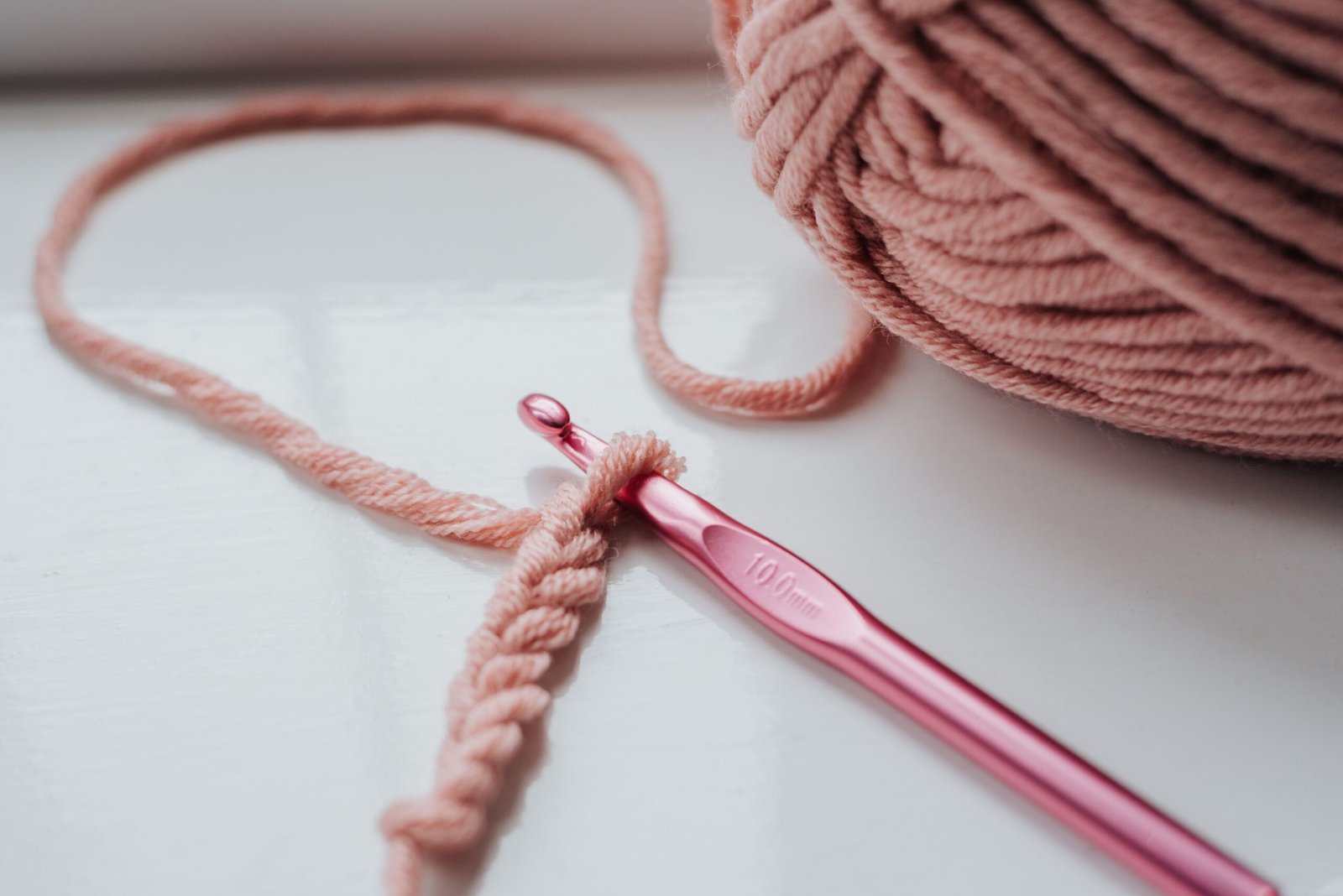
Count the starting chain twice before working into it. Follow the pattern’s stitch multiple rather than adding a few random chains for extra width. Mark the first and last working stitches, especially while learning where the turning chain belongs.
The Craft Yarn Council’s pattern-reading guide explains common US abbreviations and counting conventions. Confirm whether a tutorial uses US or UK terminology: the same stitch name can mean different things. Keep a short abbreviation note beside your project.
Check the stitch count or repeat count every row at first. A crochet Christmas table runner can slowly turn into a trapezoid if one edge stitch goes missing repeatedly. Fix the first incorrect row rather than hoping an added border will straighten it.
5. Check the Shape While You Work
Every few rows, set the fabric on a flat surface. Compare its width near the beginning with the width near the hook. Do the sides stay parallel? Is the foundation pulling inward? Does the fabric relax when you stop holding it? These quick checks catch problems before you have a table-length strip.
A tight foundation may need a larger hook for the starting chain, tested on a new sample. Wavy edges can come from extra stitches or crowded edging. Our guide to fixing curled crochet coasters covers tension and stitch-count checks that are useful for small practice pieces too.
6. Finish, Block, and Check the Fit
Secure the last loop and weave tails through the fabric without drawing the edge tight. Leave enough tail to weave back through another section; simply clipping a knot close to the surface can leave an insecure finish. Follow any finishing instructions supplied with the pattern.
Block your crochet Christmas table runner using a method compatible with its fiber. Arrange it to the intended measurements without forcing it dramatically wider or longer. Avoid direct iron contact unless the yarn’s care instructions explicitly allow it; some synthetic fibers can be permanently damaged by heat.
Wait until the runner is completely dry before placing it on a wooden table or storing it. Check the final size with plates and your centerpiece in position. If it feels crowded, remove decorations before deciding the crochet itself needs changing.
Final Result: A Runner That Works on Your Table
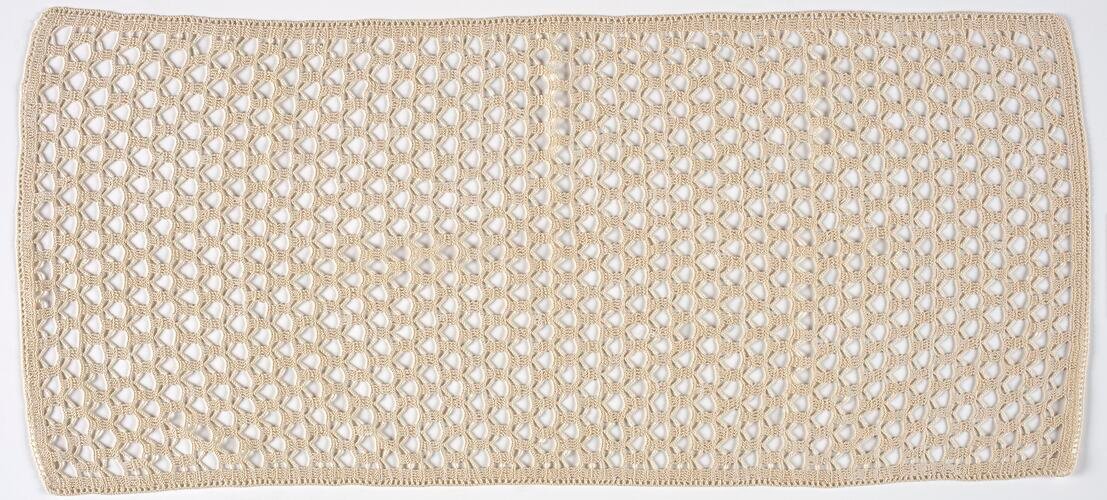
A successful crochet Christmas table runner has secure ends, a comfortable drape, and edges that sit without being held down. The photograph above illustrates a finished rectangular textile; your shell-stitch version will have its own texture and appearance.
Try cream with dark green foliage, burgundy with plain white dishes, or a single muted green for decor that can stay out after Christmas. Before washing a red-and-white project together, test your yarn sample for color transfer. Store the dry runner loosely folded and follow its yarn label for future cleaning.
Crochet Christmas Table Runner FAQs
Can a beginner crochet a Christmas table runner?
Yes, if the pattern matches the stitches you know. Choose a simple rectangle with a short repeat, practice the row ends, and check counts regularly. A long runner takes patience even when its stitches are straightforward.
What yarn should I use?
Start with the yarn specified by your chosen pattern, or sample a smooth alternative carefully. Cotton offers clear texture; other washable fibers may suit decorative use. The ball band and your washed sample matter more than a general fiber recommendation.
How long should my crochet Christmas table runner be?
Measure your table and decide between an inset arrangement and an overhang. For an overhang, add the desired drop at both ends. Include edging and fringe in that finished length, then check clearance around chairs.
How much yarn will I need?
Use the pattern’s quantity for its stated size and materials. For a resized version, estimate from a weighed sample and allow extra for finishing. A lacy runner and a dense runner of equal dimensions can use very different amounts.
Why are the sides getting narrower?
Missing the first or last working stitch is a common possibility. Compare repeat counts and inspect the turning-chain instructions. Undo to the first incorrect row when necessary; blocking cannot replace stitches that were never worked.
Can I put hot serving dishes on it?
Use an appropriate trivet beneath hot cookware. A crochet Christmas table runner is decorative and should not be assumed to protect furniture from heat. Keep the fabric away from flames, regardless of its fiber.
Make Your Holiday Table Your Own
Choose a manageable design, measure the table, and make a sample before starting the full length. Those small decisions give your crochet Christmas table runner a better chance of fitting well and surviving its first wash. Keep the original tutorial nearby and check your edges as you go.
What color would suit your table: cream, burgundy, or evergreen? Share your choice in the comments, or explore our beginner crochet collection for another project to practice before the holidays.
Featured image credit: Cgoodwin / Wikimedia Commons, CC BY-SA 4.0, unmodified. The featured filet runner and other photographs are illustrative; no endorsement by their creators is implied.
Comments